 All talks are available either in-person (within reasonable distance ) or on-line. If you are interested please contact me.
 | Home page | Bellringing | Talks & lectures | Fell walking | Settle - Carlisle | Metal sculpture | Brickwork | Journeys | Ergonomics | The rest | Site map |
All talks are available either in-person (within reasonable distance ) or on-line. If you are interested please contact me.
I have many interests - I'm a photographer, hill-walker, engineer, ergonomist, author, bellringer and more besides.
For many years I have shared my interests with clubs and groups by giving talks on a wide range of topics.
If you are interested in a talk, then contact me. See the sort of groups I have spoken to.
 That is an apt description of the tradition of English-style bellringing, which began around 1600 and thrives today. It is also the title of my book on the history of ringing in Wokingham . Unlike my general talk on bellringing (below) this talk is a social history looking at the lives and times of ringers in an English market town. The talk takes the same 300-year time-span as the book (from ~1700 when the oldest of the current bells were installed to the present day). It looks at ringing as a public sport in the 18th century, at Victorian reform of both the church and ringers, and at how in the 20th century the band evolved through the trials of two world wars into the modern era. It draws on extensive research to show how the ringers related both to the community around them and to the church in which the bells are hung. The talk lifts the lid on the very special, fascinating, but largely hidden, world of the men and women who have sustained and developed the art and skills of ringing. [Back to top]
 English style bellringing is part of our cultural heritage, and is a sound familiar to us all. It originated in England around 400 years ago and has spread to many parts of the world. Ringing requires skill, dedication and teamwork, from people who are normally invisible to their audience. This talk for non ringers gives an insight into this hidden, but fascinating, world. I explain how English style ringing evolved, how bells work, and the music of change ringing, with glimpses into the world of ringers and the fascination that ringing can offer. I vary the talk to suit the needs of the groups I am talking to. It can be anything from a 20 minute after dinner talk to a full evening's illustrated presentation – and I can adapt the emphasis to suit the audience (eg more on history for historians). I have been a ringer since my teens, and I have been actively involved in training ringers at local, regional and national level. I have published several books and articles about ringing. I ring at All Saints Wokingham – see also my talk on the history of ringing in Wokingham (above). [Back to top]
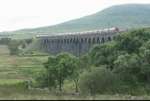 This is the story of England's most spectacular main line railway. Born out of inter company rivalry, and was driven through the most hostile but beautiful terrain, it is a superb example of Victorian engineering achievement. The attempt to close it in the 1980s resulted in the largest public reaction to any rail closure proposal. The line now serves local communities, provides an artery into the Dales for tourists and serves as a strategic freight route. This talk gives you glimpses of the line's past and recent history. I look at how the line was built, the geology that provided materials for its spectacular viaducts, and at the magnificent scenery and challenging terrain through which the Midland Railway forged a line for its prestige London to Scotland route. I end by looking at current opportunities and challenges. (See also how I knitted the famous Ribblehead Viaduct in a sweater ) [Back to top]
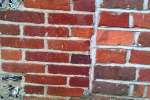 Brick-work is all around us - we take it for granted - but look more closely and you can see a wealth of fascinating detail. Brickwork is ubiquitous in this country, with bricks produced in over a thousand current or former brickworks across the country, brick-work has been influenced by changing needs, by improved technology and by passing fashions. In the talk, I describe how bricks are made, and show you how with simple observation of brickwork, you can read the stories that are written in the buildings all around us. The talk is illustrated with slides, and I may bring some samples from my collection of different types of brick – you'll be surprised how varied they are. [Back to top]
 Church bells were cast in Wokingham between the mid 1300s and the early 1600s. The foundry is long gone but some of the bells cast there are still in use. Bellfounding methods used today can be traced back to the way mediaeval founders worked. Brick making thrived in Wokingham during the 19th and early 20th centuries, with some works producing millions of bricks per year. The brickworks too are long gone but they left their mark. This talk describes these traditional local industries and how they changed over time, together with an overview of how their products were used. If the talk is given in Wokingham I can combine this with a walk round the town to see interesting examples of bricks and brickwork. [Back to top]
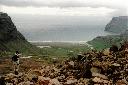 Iceland sits just below the Arctic Circle, and astride the mid Atlantic ridge, which divides Europe from North America at the boundary between their tectonic plates. The plates move apart at about an inch a year, which is why Iceland is very active in terms of volcanic eruptions, most of which never make the headlines. This unique situation gives it amazing geology, scenery, wildlife and culture. My wife and I first visited Iceland in 1991 and we have returned many times since. I will give you glimpses of this fascinating and very special country. (See also Iceland Links.) [Back to top]
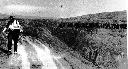 The Pennine Way was one of the first long distance footpaths to be created in Britain. It is also the longest cross-country route (only the Southwest Coast Path is longer). The Pennine Way passes through some of the finest scenery in Northern England. I walked the route with my wife in 1970 and revisited the area later to complete a photographic essay. Much of the walk is on the hills, but it also crosses valley after valley giving fascinating tastes of the different communities through which it passes. (See also Pennine Way). [Back to top]
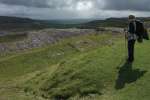 This draws on a lifetime of hill walking with a camera to bring you a pictorial anthology of hills and mountains. As well as enjoying the superb upland scenery, you will see how geology and civilisation have influenced the landscape, and how a walker can make the best of the resulting terrain. (See also Fell walking) [Back to top]
 This is the story of an attractive area of countryside near where I live, and where I have walked for decades, observing how it changed over time – with the seasons and with changing use. The talk draws on extensive photographs I have taken over nearly twenty years, together with a historical introduction and a preview of how it will be transformed by development. (See also: Walks on the south of Wokingham ) [Back to top]
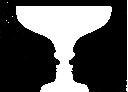 Have you ever wondered why there is so much pattern in the world around us and why our brains invent it even if it isn't there? Have you ever wondered why illusions work, or why you sometimes make 'silly' mistakes? It's wired into the human brain. Being prone to illusions, and being error prone are the price we pay for being able to survive in an uncertain, complex world. This talk will give you new insights into your perceptual senses with many examples of illusions and paradoxes. An engineering career, artistic hobbies and a lifelong scientific curiosity have gone into this fascinating talk spanning many disciplines. [Back to top]
 The discipline of Ergonomics (aka Human Factors) has come to prominence during the last century, and it plays an increasingly vital role in ensuring that our ever more complex and technological world is fit for the humans who live and work in it. In this talk I will give you some insights into the history and current practice of this fascinating subject that spans the divide between people and their environment (notably the technology on which they increasingly rely) as well as the divide between the so-called 'hard' and 'soft' sciences. To illustrate the issues I will describe many examples (good and bad) drawn from real life – from things we use every day to major industrial and aircraft disasters – including the work I did on a problematic car park and lorry drivers getting lost. [Back to top]
 Footpaths are as old as civilisation. They evolve to meet human needs, and most have an organic form that grows and changes without any planning. This is especially so for upland footpaths, which provide vital arteries for walkers, and enable us to enjoy wild places. But in many areas they are becoming an endangered species. Paths came into being because of human use, and they move or disappear when human use changes. Some are very old, but as walkers take to the hills in ever greater numbers, many paths are suffering from over-use, and consequent degradation. Some pleasant grassy paths that I walked in the '60s and '70s have turned into ugly rock-strewn scars on the hillside, under the relentless pressure of millions of boots. Some of this damage is being repaired by bodies like the National Trust and the National Parks, but it is a never-ending task. I have observed paths for many years in all sorts of terrain, in the UK and abroad, seeing how they respond to both use and misuse. This talk is a pictorial essay showing the diversity, as well as the fragility, of a very 'natural', but at the same time man-made, upland phenomenon. [Back to top]
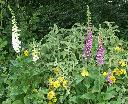 My garden and I have been together for over forty years. The garden now bears little resemblance to what was there before, with more diversity and year-round interest. Yet there were no grand schemes and no dramatic make-overs – just a slow evolution motivated by an underlying desire to enrich it. Many changes were opportunistic rather than premeditated. I try to work with the garden rather than fighting against it. This talk describes how the garden evolved, and why. It is illustrated with many pictures taken in different seasons over the years. [Back to top]
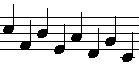 English-style bellringing – change ringing – is a very special kind of music. It shares some features with minimalism, but it is based on quite different principles, and requires very different performance skills. This talk explains the intricacies of change ringing from a musical perspective. This talk was first given to a group of experienced musicians, as a result of which I was asked to write a series of articles , and later to a group of secondary school music students. The talk also looks at other styles of bell ringing around the world. [Back to top]
 Airborne LiDAR can penetrate trees and bushes to reveal what lies underneath. LiDAR surveys provide a powerful tool for archaeologists and others to help understand what has happened in a landscape. I was intrigued when I saw a LiDAR image of Gorrick Wood, an area where I have walked extensively, containing several unusual features, so I went exploring to see what I could find 'on the ground'. This talk explains how LiDAR works, how the images are created, and what I managed to discover, including looking at old maps , and evidence of an apparently impossible railway bridge. [Back to top]
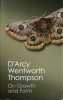 'The greatest work of prose in 20th-century science' was one description of D'Arcy Wentworth Thompson's book On Growth and Form. It was a landmark in its day and continues to inspire biologists and mathematicians. D'Arcy Thompson was a polymath eminently qualified in zoology, maths, physics and classical languages, The book is a treatise on his research into the mathematical principles that underlie nature. In the talk I give a flavour of his fascinating explanations for why natural things appear as they do. [Back to top]
 All forms of music show some mathematical structure in scales, chords and rhythm. English-style change-ringing is a very special type of music. It has no chords and no variation in rhythm, but it is underpinned by some elegant and fascinating mathematics. The continually changing sequences that constitute the music use what mathematicians call permutative group theory, which also appears in areas as diverse as cryptography and the solutions to Rubik’s Cube. The principles of group theory were formalised in the 19th century, but ringers were using them 200 years earlier without being aware of it. This talk explains the mathematical principles behind change ringing. They flow from the physical constraints on a swinging bell, from the desire for patterns that can be executed from memory, and from the concept of ‘truth’, which is unique to change ringing. The talk concludes with an explanation of the models that I built in 1968. This talk was first given to the Wokingham U3A Maths Group, You don't need a strong mathematical background to enjoy it. I also do a talk on the maths of ringing for schools . [Back to top]
 The sea surface may appear complex and chaotic, but it is subject to the laws of physics, and many aspects of its behaviour can be explained and predicted mathematically. This talk gives an overview of how sea waves form, and how they respond to wind, gravity and water depth. It looks at storms and swells, at 'killer waves' and at the Severn Bore. The talk includes work that I did during the 1960s, some of the results of which I have replicated, and it is illustrated with lots of photographs and diagrams, as well as some equations. The talk was first given to the Wokingham U3A Maths Group, and is aimed at those with a general interest in maths, not specialists. I can adapt it to suit the needs of the audience. [Back to top]
 Most people don't realise that behind the familiar sound of English style bell ringing there is a special way of hanging bells so that they can swing full circle. While the physics of a swinging bell are simple, to create a precision musical instrument that responds sensitively to the needs of its performer presents considerable engineering challenges, especially when the instrument may weigh a ton or more. I introduce this talk by explaining how ringing works, and then describe the different parts of a ringing installation, the technology on which they rely and the way it has evolved over many centuries – and and still is evolving in the 21st century with the use of novel materials and techniques.
For general audiences – there is a shorter, less technical, version of this talk focusing on the evolution aspects. [Back to top]
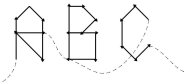 Today we take for granted that complex information can be displayed on a wide range of products . The technology that makes it possible has evolved very rapidly. Only a few decades ago the display of anything other than the most basic information required bulky equipment whose cost could only be justified on high value equipment. This talk describes how electronic display evolved during the latter part of the 20th century and is illustrated with pictures from my time working with displays at Ferranti. [Back to top]
 Over the years, many different solutions including monorails, duorails and guided buses, have been proposed for moving large numbers of people in and out of cities. I worked on one such project in the 1960s but proposals for rapid it systems go back much further. In this talk I look at how the ideas evolved from the first monorail patent in 1821, and various alternatives that have been proposed or built since then, and I end by looking at some systems that are currently in use. [Back to top]
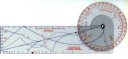 The root locus is a graphical way to solve mathematical problems in control theory, and the Spirule is a tool to help construct root locus diagrams. I used both heavily on the first project in my first job nearly 60 yers ago, which was about the control of a guided bus. In this talk I explain what a control system is, talk about dynamic behaviour and how to describe it mathematically. I then show how to use a Spirule to construct and interpret a root locus plot, and end by talking about the Guilded Bus project.. [Back to top]
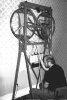 This is the story of how I designed and built a dumbbell to enable me to practise the art of bellringing away from the tower. After describing the unique features of English-style bellringing it looks at 18th century dumbbells and at modern dumbbells that existed before I started, which inspired me to try to do something better. It shows how I developed my initial ideas into a design that would be heavy enough and stable enough to be satisfying to ring, but without producing destructive forces on its 'tower' (in my house). It explains the problems I met along the way, how I solved them and how they might have been avoided with alternative designs. It ends with some video clips of the dumbbell in action. [Back to top]
The talks above originated in response to particular requests. Several other potential talks are in my head, but I haven't got round to preparing them because no one has yet asked for them. So if one of the topics below catches your fancy, try asking me. [Back to top]
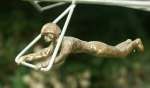 For several years while our children were young, I spent a significant part of my holidays doing metal sculpture, casting in bronze and aluminium, and welding in steel. I started with no prior experience, and managed to produce an interesting collection of objects that adorn our home. If you are curious to know about different types of artistic casting, and what is enigmatically known as 'found' sculpture, I will explain. You will also hear the experiences of a novice working under considerable time pressure, and of course you will see some of the results. (See also Metal sculpture) [Back to top]
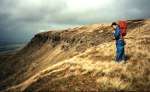 The Pennine hills contain some of Northern England's most beautiful scenery. Rugged moorland is crossed by a succession of valleys, each slightly different in character, and threaded with urban and rural settlements that portray much of the nation's industrial growth in recent centuries. I grew up on the edge of the Pennines and I have revisited them many times since. In an area larger than Wales, but perhaps less well known, there is much to tempt the photographer. [Back to top]
If you are interested in any of these talks, and not too far from Wokingham, or if you are interested in an on-line talk, then contact me: talks (at) jaharrison (dot) me (dot) uk , replacing (at) with an @ sign and (dot) with a full stop.
The Summer University, Rose Street Transport Society, South Reading Railway Group, Wokingham Rotarians, Hart Rotarians, Wokingham U3A, Wokingham Activity Group, Bracknell Forest U3A, Reading Transport Group, SE Berks National Trust, Farnborough U3A, Yateley U3A, Odiham U3A, The Marlow Society, The Bray Society, Kennet Camera Club, Wokingham History Society, Winnersh History Group, Finchampstead Society & Heritage Group, Reading Association of Women Graduates, Bracknell Railway Society, Mid Hants Railway (Thames Valley Branch), Stephenson Society (Sidney Sussex College, Cambridge), National Women's Register, Slough & Windsor Railway Society, Wokingham Civil Service Retirement Fellowship, Surrey County Council Staff Retirement Association, Kingston Civil Service Retirement Federation, Berkshire Industrial Archaeology Group, Wokingham and District Health Walkers, Wokingham Older People’s Forum, Frimley Green Townswomen's Guild, Mid Hants railway (Woking and Guildford group), Wokingham U3A Maths Group, Wokingham U3A Industrial Heritage Group, Park House School Newbury, Ladies 'After Eights', Birchetts Green & Hurley WI, Shinfield Mothers Union, Sir William Borlase's Grammar School Marlow, Wokingham U3A Technology Group, Wargrave WI, Holyport WI, Knowle Hill WI, Arborfield Over 60s, Chazey WI, Shinfield and District Local History Society, Winnersh WI, Woodley St John's Mothers Union, Caversham Afternoon Townswomen's Guild, Richmond U3A Maths Group, Gemini Group (Woodley), Arborfield Local History Society, Theale Green WI, Calcot Afternoon WI, Woodley Retired People’s Club, Wokingham All Saints Fellowship, Rosehill WI, Brimpton WI, Swallowfield History Society, Swallowfield WI, Bradfield WI, Northtown Women’s Club, Woodley Women’s Club, Sandhurst History Society, Finchampstead WI, Falkland WI, Twyford & Ruscombe WI, Berkshire Family History Society (Bracknell & Wokingham), Cookham Dean WI, Aldermaston & Wasing Ladies Group, Burghfield WI, Wokingham Borough Council Community Services, St Crispins School Wokingham, Chalfont Club, Sunningdale WI, Binfield WI, Crowthorne WI, Sunninghill Darby & Joan Club, Caversham Heights TWG, Caversham WI, Radstock WI, Hedgerley WI., Woosehill WI, Amersham Methodists, Twyford Friendship Club, U3A Thames Valley Network, Reading Oddfellows (Crown of England Lodge), Harpsden WI, MORS (Men of Rose Street), Reading U3A Science & Technology Group, Wargrave Local History Society, Loden Valley Ramblers, Wokingham Welcome Club, Didcot U3A Maths Science & Technology Group, Tadley Civil Service Retirement Association, Wraysbury History Group, Hurstbourne Tarrant Historical Society, Reading East PROBUS Club, Rotary Club of Reading Maiden Erleigh, Newbury & District Field Club, Newbold Senior Members Club, Ladies Golden Circle (Sandhurst), Spelthorne Local History Group, Little Chalfont Methodist Church Tuesday Fellowship, Lambourne Valley Horticultural Society, IEHF Southern Regional Group, Reading Welsh Society, IEHF London & Southeast and Southwest and South Wales Regional Groups, National U3A, Wokingham Society, Berkshire Archaeology Society, Rotary Club of Ascot, Wokingham U3A Archaeology Group, Rickmansworth U3A Engineering Heritage Group, ReConnecting CArms CIC, Harwell History Group, Watford and District Industrial History Society, Egham by Runnymede Historical Society, Broxbourne u3a, Women of Wokingham WI, St Mary's Church Richmond Upon Thames, Bromsgrove u3a, National Women's Register
| Back to top | Return to Home page |